BLOG

The first rule on how to keep writing

Living the Multi-Potential Life: Why Some of Us Don’t Have One True Calling

I have always had many interests – knowledge, skills, and abilities.

Teaching, training, counseling, writing, designing, traveling, conceptualizing/ideator, serving, and meeting the needs of others.

I get bored easily and often move from one creative interest to the other, as needed.

Living the Multi-Potential Life

The thing is, many of the interests that I have gives me great joy; especially when it comes to publishing, training, writing, counseling, and community involvement.

If I am designing a magazine, banner, or book cover – it’s like the purest rain of peace is flowing within me.

When I am crafting an article, the words spirit from my fingertips like baby Usain Bolts.

When I am giving back, through feeding, clothing, etc, initiatives it feels like the purest of heavenly sensations.

So, why should I settle? Why should I give up these experiences and focus on only one pursuit in life for anyone?

The Struggles of Living the Multi-Potential Life

The downside is, I live in a world that tries to pigeonhole me and put me in a box. Worse yet, those who identify the potentials, seem to always want to take advantage of it.

Can you identify with this kind of life?

Recently, I came across a TED Talk by Emilie Wapnick. She too shared this dilemma and her Talk, truly resonated with me. She encourages people like her to embrace their skills. For others to embrace and have people with multipotential in their groups because they bring a wealth of knowledge and skills to the table and can work adeptly to solve complex problems.

Why do I have to shape my life to a box that everyone else tries to put me in?

Why do you?

Well, no more. Let’s venture to create our own reality. People with multiple potential are like rare treasures, which should be allowed to flourish and contribute to the wider society without being penalized by others – especially employers.

Employers and recruiters often look at the resumes of people with multiple potential and think they are less valuable and cannot contribute. Truly, this couldn’t be any farther from the truth.

Having someone with multi-potential working at your company, allows you to tap into a bottomless reserve of knowledge, skills, and abilities. They will always have fresh ideas when you are posed with unique problems.

I have had managers who always say to me, “Where do you always get these ideas?”

I love problem-solving. I love a challenge.

If you are struggling with being a multi-potentialite. Then STOP struggling and embrace the many gifts and abilities, which you were born with.

Know that you naturally have three top skills:

  1. Idea Synthesis
  2. Rapid Learning
  3. Adaptability

If you love working with people, leading teams, solving budget accounts issues, meeting people’s needs, and building beautiful structures – you are well on your way to having the necessary skills to run your own construction, architecture or landscaping business.

Be positive.

Identify your skills.

List your dreams.

Write down your life goals.

Take the first step.

Love yourself and live the life that you want.

Follow your curiosity down the rabbit holes! Live a more authentic life by being true to yourself.

*****

About the writer:
Poetess Denise N. Fyffe is a published author of over 50 books, for more than ten years and enjoys Training and Counseling. She is a freelance writer for online publications such as Revealing the Christian Life, Jamaica Rose, Entertainment Trail, My Trending Stories among others.

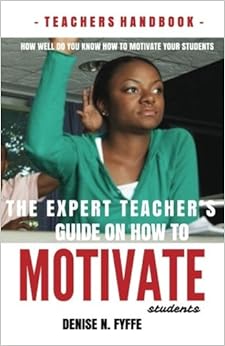
Check out her book The Expert Teacher’s Guide on How to Motivate


This handbook highlights the most efficient teaching techniques to motivate students. The Expert Teacher’s Guide on How to Motivate Students initially examines who is an expert teacher and how to become one. Then it will delve into how to get students to learn any subject by implementing effective motivation strategies.

Available at all online book retailers and Amazon.com.

Career Development: Examining Strategies for Advancing Career Development in Jamaica

Strategies for Advancing Career Development in Jamaica

by Denise N. Fyffe


Career Development is both a social and economic policy issue and it is the foundation of the school-to-work process. Career development issues must be debated at the national level if we are going to articulate that the education system has primary responsibility for preparing graduates for constructive employment or for further study or training.

Proposed Strategies

In response to the current state, the following strategies for advancement are being proposed:

Creating a career development culture

Our culture needs to promote lifelong learning for career development and instill an emphasis on individual responsibility for the provision of career education. The idea of managing one’s career and obtaining advice and information on a regular basis (not just in a crisis), should be instilled throughout life.

MOE Policies

Policy directives from the Ministry of Education to incorporate Career Development as an integral part of education, rather than an optional possibility, as is currently the case in many schools.

Mandatory inclusion of career development studies and training for teachers at Teachers’ colleges.

Career Development Association

The establishment of a recognizable association of professional Career Development Practitioners to be responsible for policies, programs, delivery systems, qualifications, and ethics & guidelines of the profession.

Campaign to change the stigma attached to certain fields of study. In some cases, career education is perceived as being solely for technical or vocational students who will not progress to college or further education.

Distinguishing the differences (in function, training, and need) between guidance counselors, career counselors, and practitioners.

Institution Alliances

Developing an alliance with national and regional educational bodies such as the University Council of Jamaica (UCJ) and the Caribbean Area Network for Quality Assurance in Tertiary Education (CANQATE) for strong partnerships and sharing of resources to achieve shared goals.

Making use of public libraries as resource centers fully equipped to meet the challenges of career information needs.

Accountability for results in career development service

For example, PROGIS making an impact, and how much compared to the resources? – The need for evaluation and accountability of service providers.

Providing access and training for adult clients: highly skilled or educated clients whose only barrier is labor market opportunity.

Including career education as part of the remedial education system for prisoners.

Making use of Technology

Computer services are central in most service areas in our economy, including the provision of career development services and a valuable information base.

Promoting Career Development as a vehicle for education reform in Jamaica.

Sensitize principals and school boards about Career Development as a part of the teaching and learning process.

The necessity of Career Education in producing better workers and citizens.

Staffing community network agencies such as Parent Teachers Associations, Church groups, The Jamaica Information Service, Police Youth Clubs, Jamaica Junior Chambers, Kiwanis clubs, neighborhood watches, strata societies, and other community service agents, and career specialists to meet the diversity of needs for adult clients. These include mid-career changers, dislocated workers, long-term unemployed persons, older workers, women entering or re-entering the labor force, persons with disabilities, incarcerated adults, and retirees.

Ensuring evaluation and improvement of existing internship programs at technical and community colleges, with a view to administering career intervention through specialized staff members.

Conduct industry workshops to attract the sponsorship of the private sector in investing in Career Development Education.

*****

Check out Jamaican Guidance Counsellor’s Handbook

jamaican guidance counsellorThe Jamaican Guidance Counsellor’s Handbook, introduces the Jamaican educational system and highlights the psychometric movement, the trait, and factor theory as well as legislation that impacted the development of present guidelines and ethical standards. It also explores the counseling process, issues of school management, school organizational structure, and several counseling techniques which are apt for the school setting. The book also examines the various roles and responsibilities of a Jamaican Guidance Counsellor and provides a list of resource centers in Jamaica.


Available at all online book retailers and Amazon.com.


4 Best Self Publishing Companies

4 Best Self-Publishing Companies

If you are like me, then as an author, you want to find the best self-publishing companies.

Don’t worry, some are out there.

I have been self-publishing paperbacks and eBooks since 2010. Let’s just say, there was a huge learning curve and I am still learning.

The internet is a vast ocean that seems to be expanding every day. Not to mention, there are some unscrupulous agents out there that are just waiting to rob you of your money.

Where to Self Publish Books

First, you don’t have to pay to self publish your book.

You do have to pay to ship copies to your self, at a reduced cost. The best self-publishing companies allow you to publish free.

  • To access expanded distribution, free.
  • To design your own book cover, free.
  • To upload your manuscript and convert it to any format, free.

1. Lulu.com

This is easily accessible and my first self-publishing website,

Unlike Amazon, Lulu allows you to order proof copies before the book is approved for distribution to other third-party bookstores and catalogs. The distribution option is a prime example of the good service that the best self-publishing companies offer.

The disadvantage is that you must order the copy before you get distribution.

Another advantage, of these self-publishing companies, is that you can decide where your earnings go before a book is sold and you don’t have to wait for a particular limit; Lulu.com offers this.

My option is PayPal and I love being surprised when I get an email advising me of the transfer of funds.

2. Amazon Kindle

That brings me to why I jumped over to Amazon Kindle Publishing self-publishing website.

Here you will find no delay in getting your self published eBook to market.

Amazon Kindle’s process is user-friendly and simple. If you are looking for a lot of frills, don’t look here. What I like though, is that I can edit my details, book cover or the inside of the book with no hassle.

Unlike Lulu.com, this portal has an immediate upload to Amazon’s bookstore.

In terms of payment, the limit is different and I am yet to figure out how to get PayPal payments or credit card payments and not check payments which are highly likely to take months in the mail; if they reach at all.

3. Amazon Createspace

I also use Amazon Createspace.

This process is different from both Lulu.com and Kindle Publishing.

Your self published book must go through an approval process before it goes live on the Amazon bookstore. Whereas Kindle is for the self-publishing of eBooks, Createspace allows you to self publish paperbacks for the Amazon bookstore.

I dislike the payment options associated with Amazon Createspace, you must reach a threshold of $100 in either the US, UK or CAD currencies. Nothing is mixed.

Suh dag nyam yuh supper if each fills up likkle likkle.’

4. Smashwords

Smashwords sucked my self-publishing paperback and eBook mojo.

They are tedious and have a discouraging process. I have never been frustrated so much in my life unless you count my beginners days in learning programming code C or C++.

This website is recommended for the patient and tech savvy.

The best thing about the Smashwords self-publishing website is their distribution stream; this goes to quite a few other online bookstores.

As you can see I mainly self publish through:

  1. Kindle self-publishing website
  2. Lulu.com self-publishing website
  3. Createspace self-publishing website
  4. Smashwords self-publishing website

My books can be found at a number of online websites, including Smashwords, Barnes and Noble, Lulu.com, and Amazon.

*****

Check out her book How to Keep Writing

This book shares key practical strategies on how to become an author and a working writer. It helps you to get over the everyday nuisances that hinder the writing process. You can follow each strategy, at your own pace until you are writing often. It is geared towards both aspiring fiction and nonfiction authors and working writers who produce content, on a daily basis.

Available at all online book retailers and Amazon.com.

Career Development: Examining Carpal Tunnel Syndrome

Examining Carpal Tunnel Syndrome

by Denise N. Fyffe

In the workplace, there is a silent and oftentimes threatening illness for employers and employees alike. This is the threat and the lack of knowledge of proper ergonomics.

Ergonomics

Ergonomics is defined as the science of fitting workplace conditions and job demands to the capabilities of workers (NIOSH, 1997). Ergonomics comes from the Greek ergon means work, and nomoi means natural laws. Some people think of ergonomics in terms of the study of designing objects to be better adapted to the shape of the human body and/or to correct the user’s posture.

When ergonomics is applied correctly in the work environment, visual and musculoskeletal discomfort and fatigue are reduced significantly.

Office ergonomics can help a person be more comfortable at work, reduce stress on the body, and reduce injuries caused by prolonged awkward positions and repetitive tasks at an office workstation. Office ergonomics focuses on how the workstation is set up—the placement of your desk, computer monitor, chair, and associated tools, such as a computer keyboard and mouse.

It also examines a person’s job surroundings, including the work surface, lighting, or noise level. Common examples include chairs designed to prevent the user from sitting in positions that may have a detrimental effect on the spine, and the ergonomic desk which offers an adjustable keyboard tray, a main desktop of variable height and other elements which can be changed by the user and other elements which can be changed by the user

In recent years various repetitive motion injuries have been identified as a factor in employee injuries. These injuries are caused by excessive and repeated physical stress on the musculoskeletal system – the hands, wrists, elbows, shoulders, neck, and back. Implementing ergonomic principles helps reduce stress and eliminate many potential injuries and disorders associated with the overuse of muscles, bad posture, and repeated tasks. It is achieved by designing tasks, workspaces, controls, displays, tools, lighting, and equipment to fit the employee’s physical capabilities and limitations.

Health Problems

In my work setting, there was an instance where a co-worker suffered from the absence of ergonomics. This person developed musculoskeletal disorders. Where ergonomics is not practiced efficiently there are always incidents of musculoskeletal disorders.

Musculoskeletal Disorders

Musculoskeletal disorders include a group of conditions that involve the nerves, tendons, muscles, and supporting structures such as intervertebral discs. They represent a wide range of disorders, which can differ in severity from mild periodic symptoms to severe chronic and debilitating conditions.

Examples include:

  • Carpal Tunnel Syndrome
  • Tenosynovitis
  • Tension Neck Syndrome
  • Low Back Pain

Carpal Tunnel Syndrome

The carpal tunnel is a narrow passageway in the wrist that is made of wrist bones on three sides and a ligament (transverse carpal ligament) across the wrist where the palm and forearm meet. Tendons and the nerve (median nerve) for parts of your hand pass through this space to your hand. The median nerve supplies feeling to part of the hand. It also supplies muscles that control some movements of the thumb. Normally, there is enough room in the carpal tunnel for all these structures to pass through easily. Carpal tunnel syndrome is usually caused when the structures passing through the tunnel are crowded together and the median nerve becomes compressed ([1]).

Work-Related Musculoskeletal Disorders (WMSDs) like Carpal Tunnel Syndrome are made worse by the work environment. They can cause severe and debilitating symptoms such as pain, numbness, and tingling; reduced worker productivity; lost time from work; temporary or permanent disability; inability to perform job tasks; and an increase in workers compensation costs. Carpal Tunnel Syndrome can be addressed by ergonomics. Ergonomics is the science of fitting workplace conditions and job demands to the capabilities of workers. In other words, musculoskeletal disorders are the problem and ergonomics is a solution (NIOSH, 1997).

Cause of Carpal Tunnel Syndrome

Jobs that have repetitive, forceful, or prolonged exertions of the hands; frequent or heavy lifting, pushing, pulling, or carrying of heavy objects; prolonged awkward postures; and vibration contribute to Work-Related Musculoskeletal Disorders (WMSDs). Jobs or working conditions that combine risk factors will increase the risk for musculoskeletal problems. The level of risk depends on how long a worker is exposed to these conditions, how often they are exposed, and the level of exposure.

Impact of Carpal Tunnel Syndrome

If carpal tunnel syndrome isn’t treated, the hand may become weaker and numb.

  • Permanent numbness and weakness can result.
  • The person is limited in the activities they can perform.
  • The individual will always be favoring the hand, meaning that they will be protective and shy away from normal contact.
  • They will be affected by pain and discomfort, and they won’t be able to function normally. For example, they will not be able to lift or hold moderate to heavy implements, carry babies/ small children, stretch their hands and sleep comfortably.

In the United States, musculoskeletal disorders of any cause are among the most prevalent medical problems, affecting 7% of the population and accounting for 14% of physician visits and 19% of hospital stays. When looking specifically at work-related musculoskeletal disorders, the Bureau of Labor Statistics (BLS) reports that in 1995, 62% (308,000) of all illness cases were due to disorders associated with repeated trauma. This figure does not include back injuries.

BLS also reports that the number of cases of repeated trauma has increased significantly, rising from 23,800 cases in 1972 to 332,000 cases in 1994—a fourteen-fold increase. In 1995 the number of cases decreased by 7% to 308,000 reported cases, but this number still exceeds the number of cases in any year prior to 1994.

When looking specifically at cases involving days away from work, for which more detailed information is available, BLS reports that in 1994, approximately 32% or 705,800 cases were the result of overexertion or repetitive motion. This figure includes back injuries (NIOSH, 1997).

Conclusion

Once we become accustomed to working on our computers, most of us are not at all concerned about how our workstation is set up.  We are more concerned about simply turning on the machine and starting it to work.

Many then sit hunched over at the computer for a couple of hours and later wonder why they feel so tired at the end of the day. Our eyes may be blurred, our wrists may feel sore, our shoulders, necks, and backs may ache a bit, and we feel totally drained. This is due to the absence of the practice of Ergonomics.

Ergonomics is the study of how people interact with their work and work environment. Office ergonomics can help a person be more comfortable at work, reduce stress on the body, and reduce injuries caused by prolonged awkward positions and repetitive tasks at an office workstation. However, if ergonomics is not utilized then persons within the work environment will suffer from work-related injuries.

Work-related injuries may include Carpal Tunnel Syndrome, Tenosynovitis, Tension Neck Syndrome, and Low Back Pain.

Carpal tunnel syndrome is a specific group of symptoms including tingling, numbness, weakness, or pain in the fingers, thumb, or hand and occasionally spreading up the arm. These symptoms occur when there is pressure on the median nerve, which runs through the wrist’s carpal tunnel to the hand. Long-term pressure on the median nerve can cause permanent nerve damage.

If the hand is injured or weak then the person is limited in the activities, they can perform. Some activities which may prove difficult are lifting, holding, and carrying moderate to heavy things.

Sources


*****

Check out her book The Caribbean Family

The family is the genesis of all societies. Every culture has its distinct rules by which a family is governed, and the Caribbean family is no exception. Those rules differ within each group; for the Indians, Chinese, and Africans. Making up most of the population in the Caribbean, African families have spawned several sub-units or types; some of which are unique to the African culture. This book explores each family type and their history within the Caribbean.

Available at all online book retailers and Amazon.com


Copyright © 2021 · All Rights Reserved · Denise N. Fyffe

How to keep writing by denise n fyffe

How to Keep Writing With Practical Strategies

Introduction to How to Keep Writing

Where do you find the time to write so many books? I have heard this question asked by my peers so many times. The simple answer is that I make the time and I commit to the process.

Since 2009, I committed fully to becoming a published author. Originally, I started out by writing poetry and I have since released more than ten poetry tiles. However, I later released trade books, nonfiction, and fiction titles as well.

Every year, my aim was to improve my writing and book production skills. With hundreds of millions of books on the market – and dozens released every day – the only way to become successful is to learn new strategies and keep up with the latest trends.

If you have followed any of my blogs – the links can be found at the back of this book, How to Keep Writing – you would have seen the transition over the years, as my book writing and production skills improved.


buy-now-book_blue

buy-from-button-amazon

Books by Denise N. Fyffe

It’s 2019, and in ten years, I have authored more than 40 books across several book genres and I do not plan to stop writing anytime soon. Some of my published titles include:

  Title Genre/Category Publisher
1.        Learning Management System Efficiency vs. Staff Proficiency Academic Jamaica Pen Publishers
2.        The Philosophy of Education and Work Academic Jamaica Pen Publishers
3.        Thieves in the Workplace Academic Jamaica Pen Publishers
4.        Examining Career Development in Learning Organisations Academic Jamaica Pen Publishers
5.        Empowering the 21st Century Worker Academic Jamaica Pen Publishers
6.        Examining Career Development Jamaica and Australia Academic Jamaica Pen Publishers
7.        Sophie’s Place: Career Development and the Disabled Academic Jamaica Pen Publishers
8.        The Expert Teacher’s Guide on How to Motivate Students Academic Jamaica Pen Publishers
9.        The Guidance Counsellor’s Handbook Academic Jamaica Pen Publishers
10.    The Jamaican Guidance Counsellor’s Handbook Academic Jamaica Pen Publishers
11.    The Caribbean Family Academic Jamaica Pen Publishers
12.    The Impact of Trade Unions in Jamaica Academic Jamaica Pen Publishers
13.    Understanding the Human Element: How Social Psychology Shapes Criminal Justice Academic Jamaica Pen Publishers
14.    Declarations for My Sons and Daughters Christian Jamaica Pen Publishers
15.    Be Lifted Up Christian Jamaica Pen Publishers
16.    Be Encouraged Christian Jamaica Pen Publishers
17.    Be Encouraged Devotional and Prayer Journal: Christian Journal and Notebook for Devotion and Bible Study for Men and Women | 150 Pages Christian Jamaica Pen Publishers
18.    Revealing The Spiritual Truth About Depression & Suicide Christian Jamaica Pen Publishers
19.    Declarations for My Sons and Daughters Christian Jamaica Pen Publishers
20.    Declarations for My Sons Christian Jamaica Pen Publishers
21.    Declarations for My Daughters Christian Jamaica Pen Publishers
22.    Declarations for My Life Christian Jamaica Pen Publishers
23.    Declarations for My Spouse Christian Jamaica Pen Publishers
24.    Declarations for My Family Christian Jamaica Pen Publishers
25.    Declarations for My Country Christian Jamaica Pen Publishers
26.    Be Enduring Christian Jamaica Pen Publishers
27.    Power Prayers and Prayer Points Christian Jamaica Pen Publishers
28.    Tears Are Prayers Too Christian Jamaica Pen Publishers
29.    Treasures of Colombia Cook Book Jamaica Pen Publishers
30.    Treasures of Jamaica Cook Book Jamaica Pen Publishers
31.    Sudden Death: Loosening Foundations Fiction Jamaica Pen Publishers
32.    Tragedy in Chalky Hill Fiction Jamaica Pen Publishers
33.    Bitter Exit in Kingston Fiction Jamaica Pen Publishers
34.    Deadly Surprise in Portmore Fiction Jamaica Pen Publishers
35.    Vengeance in Chapleton Fiction Jamaica Pen Publishers
36.    Innocence Lost on Ken Hill Drive Fiction Jamaica Pen Publishers
37.    The Island Journal Non-Fiction Jamaica Pen Publishers
38.    Fibroids: The Alien Assassins in My Body Non-Fiction Jamaica Pen Publishers
39.    How to Keep Writing Non-Fiction Jamaica Pen Publishers
40.    Weddings in Paradise Non-Fiction Jamaica Pen Publishers
41.    Jamaican Pebbles Poetry Jamaica Pen Publishers
42.    Recount Jamaica Poetry Jamaica Pen Publishers
43.    Di Summer of 2015 Poetry Jamaica Pen Publishers
44.    My Grieving Heart Poetry Jamaica Pen Publishers
45.    The Poet’s Prayer Poetry Jamaica Pen Publishers
46.    Highways, Byways and Beyond Poetry Jamaica Pen Publishers
47.    101 Jamaican Love Poems Poetry Jamaica Pen Publishers


During that same period, I have been a working writer, producing more than 10,000 articles, academic papers, website content, and eBooks for dozens of international clients.

In this book, How to Keep Writing, I will share several strategies on how to become an author and a working writer.

Everyone Wants to Know How to Write A Book

Writing is not for the faint of heart.

As many of you – who have actually tried – would realize it takes more than just a whim to follow through on being a writer. For those of you who are still dreaming about the idea or are in love with the idea of being a writer, the reality is waiting for you.

It is my experience that every other person has some fantastical idea of who writers are, and what their lives are like.

They see famous authors such as Jane Austen, Herman Melville, Mark Twain, Charles Dickens, J. R. R. Tolkien, Maya Angelou, J.K. Rowling, Paulo Coelho, Nicholas Sparks, and Stephen King and they believe that this level of success is easily attainable and that it can be achieved overnight.

News flash that is not the case!

Mind you, some of these famous authors gained notoriety after they died.

Writing Is Hard Work

Thousands of writers who have tasted such success had to work diligently at mastering their craft and have experienced innumerable rejection letters at every turn.

For working writers, such as copywriters, technical writers, web content creators, and even editors, have to compete with thousands of people across the globe.

In addition, if you do not work for a mainstream publisher or work exclusively online, you are faced with the reality of accepting a meager payment for your work because someone in the Philippines is charging pennies on the dollar.

Writers Are Taken For Granted

The disregard for writers comes from clients as well; because most are not willing to pay fair market value for articles and website content either. I have been approached by real estate agents, lawyers, doctors, and even acquaintances, who are only willing to offer rates at or below minimum wage.

Many acquaintances, try to use my services free of charge.

They begin to look at me side-eyed when I resist. It is as if they wish for me to starve and do not remember that I have bills to pay as well!

There are countless times when that was indeed the reality.

Do You Want to Become A Working Writer

So, if you decide to become a writer, you need to understand that this is not an easy gig.

Get a copy of the book, How to Keep Writing, and learn practical strategies on how to become an author and a working writer.


Are you a working writer, an aspiring author struggling to keep writing or interested in the world of online publishing? Share some of your experiences in the field below.

*****

Check out her book How to Keep Writing


This book shares key practical strategies on how to become an author and a working writer. It helps you to get over the everyday nuisances that hinder the writing process. You can follow each strategy, at your own pace until you are writing often. It is geared towards both aspiring fiction and nonfiction authors and working writers who produce content, on a daily basis.

Available at all online book retailers and Amazon.com.